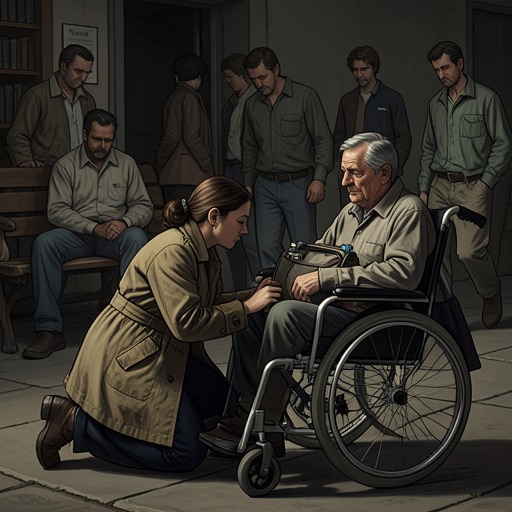
Peter’s mental illness
The Life ListPeter’s mental illness becomes increasingly difficult to manage during Brett Bohlinger’s homebound teaching visits, until an outburst at home leads to his transfer to New Pathways. The narrative does not identify a specific diagnosis or explain the cause of his condition; it shows its effects through changes in behavior, the growing limits of home instruction, and the concern of the adults responsible for his care. Peter’s educational ability remains visible alongside that distress, complicating any simple picture of him as only a danger or a problem to be solved.
Identity and Educational Setting
Peter is a sixth grader receiving instruction at home. During a Friday visit, Brett schedules his appointment last because she knows how readily he can affect her mood. Autumn directs her to the kitchen, where Peter sits at a cluttered table. His mother remains in the living room, where the television and cigarette smoke accompany the session. The household details place the lesson within a difficult domestic atmosphere, though the account does not establish them as causes of Peter’s illness.
His behavior has changed in at least one limited respect: he now comes out of his room without a battle. Brett nevertheless experiences him as rude and sullen, and compares his manner to his mother’s. That comparison conveys her impression in the moment, not a diagnosis or an explanation of his condition. The easing of one daily confrontation does not amount to a broader recovery; Peter remains difficult to reach, and later incidents show that the situation is worsening.
Brett brings an algebra book and tells Peter that most sixth graders do not study algebra, while noting that he is in the honors section. The lesson is on dividing polynomials, material Mrs. Kiefer wants him to review. His placement in an advanced class is a concrete reminder that his educational profile cannot be reduced to his behavior or mental health. At the same time, Brett’s effort to frame the work as something to be proud of does not resolve the interpersonal strain between them.
Escalation and Concern for Safety
After Peter reacts cruelly to books, Brett calls Garrett Taylor, her voice still shaking, and describes what happened. Garrett apologizes and says Peter’s behavior at home is escalating. In his view, homebound instruction is not the right answer: Peter needs another placement, and Garrett plans to make calls. The proposed change therefore follows both a particular upsetting encounter for Brett and a wider deterioration that Garrett says is occurring at home.
Brett tries to interpret Peter’s reaction in less personal terms. She wonders whether he thought the books were silly or insulting, or whether he felt that receiving presents made him seem like a charity case. Garrett rejects that explanation as the central issue. He tells her that Peter wants to hurt her, that so far the harm has been emotional, and that he is concerned it could become worse. Brett remembers Peter’s cold grin and shivers. The exchange distinguishes Brett’s search for a misunderstanding she might repair from Garrett’s assessment that the danger cannot be managed by winning Peter over.
The narrative does not describe the books in detail or establish exactly what Peter intended by his reaction. It does, however, show how the incident changes Brett’s understanding of her role: her kindness and persistence may not make her safe, and effort alone may not alter Peter’s behavior. Garrett’s warning is about possible future harm, not a report that Peter physically injured Brett during that encounter.
Treatment and Transfer
Garrett identifies New Pathways, a Cook County program for teenagers with mental illness, as a more suitable placement. He describes a two-to-one student-to-staff ratio and intensive therapy twice a day. Peter is somewhat younger than the program ordinarily accepts, so Garrett hopes staff will make an exception. These particulars mark the difference between Brett’s individual home lessons and a setting organized around sustained therapeutic support.
Brett reacts with both relief and disappointment. She understands why a different placement may be needed, yet feels as if she is abandoning a mission just before its ending. She still imagines that the story might conclude with Peter making progress and returning to his old school. That hope is important to her, but the evidence does not promise that the transfer will produce such a result. At this point, it is a change in the care arrangement, not a demonstrated recovery.
The transfer becomes urgent after Peter has another violent outburst at home. Garrett tells Brett that Autumn could not contain him; neighbors heard the commotion and came to help. The account does not specify what Peter did or what he might have done, and Brett’s fear is partly expressed through her imagining the scene. What is clear is that the household could not manage the episode alone and that the risk had moved beyond the emotional harm Garrett had previously described.
Garrett then reports that New Pathways has agreed to open a place for Peter. Peter is to start later that week, and homebound visits end immediately. The suddenness of that change gives Brett no opportunity to say goodbye. She feels a surprising melancholy: even after the frightening incidents, she had continued to hope for a happy ending in which Peter improved and returned to the ordinary school he had attended before.
Change and Narrative Significance
Peter’s course is defined less by a disclosed diagnosis than by a sequence of practical limits. A home lesson can accommodate an advanced math assignment, and Brett can persist through difficult encounters, but neither is enough to address the escalating behavior Garrett describes. Once the outburst at home requires neighbors’ help, the case for a different level of care becomes immediate. New Pathways represents a change in placement and access to intensive therapy; the account leaves its longer-term effects unknown.
The episode also refuses a clean emotional resolution. Brett can recognize the need to stop visiting while still grieving the loss of the ending she had hoped to help bring about. Her wish that Peter return to his old school keeps educational progress in view, but the abrupt end of visits interrupts that imagined trajectory before any outcome is known. Peter’s mental illness thus remains an unresolved condition in the narrative: serious enough to reshape his care and unsettle those around him, but not explained or resolved by the transfer alone.